For waterfront homeowners in Miami-Dade, a seawall is not just a concrete edge. It is part of the property's protection system. It holds back soil, defines the waterfront boundary, supports outdoor living areas, and protects high-value improvements near the water.
The challenge is that seawall problems often begin quietly. A small crack, a soft spot in the lawn, or a little water seepage may not seem urgent. But along canals, bays, and tidal waterways in South Miami, Coral Gables, Coconut Grove, Cutler Bay, Pinecrest, and nearby coastal neighborhoods, small changes can point to drainage pressure, soil movement, corrosion, or structural stress behind the wall.
1. Cracks That Keep Growing
Not every hairline crack means immediate failure, but cracks should never be ignored. A crack that widens, multiplies, or follows a pattern across panels, caps, or returns can suggest that the wall is moving or that pressure behind the wall is changing.
- Vertical cracks through panels
- Horizontal cracks near the cap
- Stair-step cracking near returns
- Cracks that reopen after patching
- Cracks paired with soil loss or seepage
If cracks appear after a major storm, king tide cycle, dock work, pool renovation, or nearby construction, schedule a review before the damage develops further.
2. Leaning, Bowing, or Movement
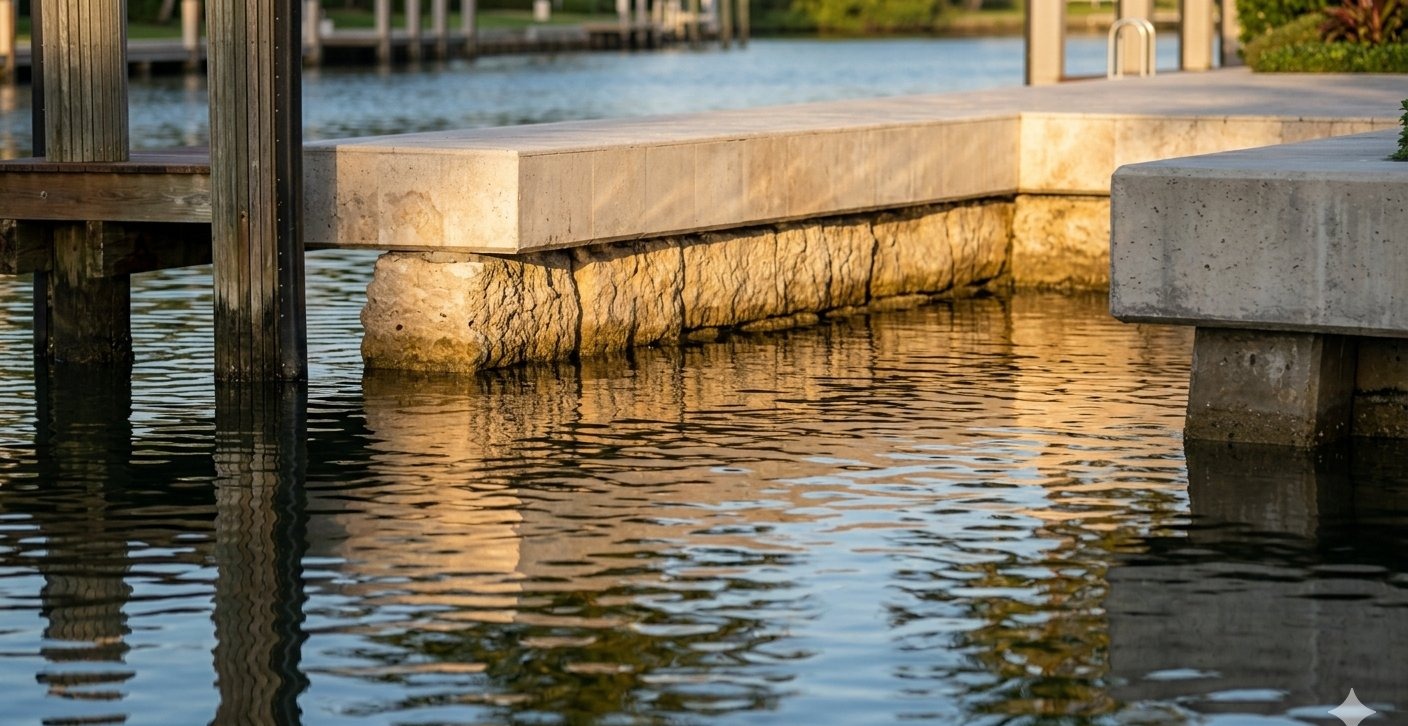
A seawall should not look like it is slowly moving toward or away from the water. Leaning, bowing, or uneven alignment may indicate that the wall is under pressure or that the soil behind or beneath it is no longer supporting it evenly.
This is especially important when movement appears near patios, pool decks, docks, driveways, or landscape walls. Those improvements can add loads or hide drainage patterns that contribute to the problem.
3. Soil Loss Behind the Wall
One of the most important warning signs is soil disappearing behind the seawall. Homeowners may notice sinking sod, depressions, holes near the cap, loose soil, or areas where pavers and hardscape no longer sit level.
Soil loss can occur when water moves through cracks, joints, failed drains, gaps, or weak points in the seawall. As soil washes out, voids may form behind the wall. Those voids can eventually affect nearby hardscape, landscaping, dock access, and structural stability.
If you can see gaps between the land and the seawall, do not simply fill the area with soil and move on. The source of the washout should be understood first.
4. Rust Stains, Spalling, and Exposed Rebar
South Florida's saltwater environment is hard on concrete and metal. Rust stains, concrete flaking, exposed rebar, and crumbling areas suggest that reinforcement or embedded metal components are deteriorating. Visible corrosion does not always tell the full story, but paired with cracking, spalling, or movement, the concern becomes serious.
5. Water Seepage or Wet Areas Behind the Wall
Water coming through joints or cracks can carry soil with it. Look for damp soil behind the wall after tides or rain, water bubbling through cracks or joints, small channels where soil appears to be moving, persistent puddling near the seawall, and unusual wet areas on otherwise dry days. Poor drainage behind a seawall can increase pressure and accelerate deterioration. A repair plan should address drainage, not only the concrete surface.
6. Settlement Near Patios, Pools, Docks, or Landscape Walls
Many waterfront homes have valuable improvements close to the shoreline. Pool decks, patios, outdoor kitchens, dock approaches, walkways, and landscape walls can all be affected by soil movement near the seawall. If pavers sink, pool decks crack, or landscape walls shift near the waterfront, the issue may be connected to drainage, erosion, or seawall movement — not the surface itself.
"The best time to review a Miami seawall is before a major failure — not after. Early assessment keeps options open."
Why Early Assessment Matters
Early assessment helps identify whether the concern is cosmetic, maintenance-related, drainage-related, or structural. It can also help property owners plan around permitting, access, budget, and timing. Waterfront work in Miami-Dade can require approvals depending on the location and scope, especially when work occurs in or near tidal waters or coastal wetlands.
Walk your waterfront edge after heavy rain and after high-tide events. Take photos of cracks, soil movement, wet areas, and alignment changes. Compare those photos over time so you can see whether the condition is changing. Then schedule a waterfront property assessment.
South Miami Waterfront Protection can review visible seawall concerns, drainage patterns, erosion signs, and next-step priorities across Coral Gables, Coconut Grove, Cutler Bay, and all of South Florida. Also explore our seawall repair and restoration and waterfront property assessments.
Common Questions