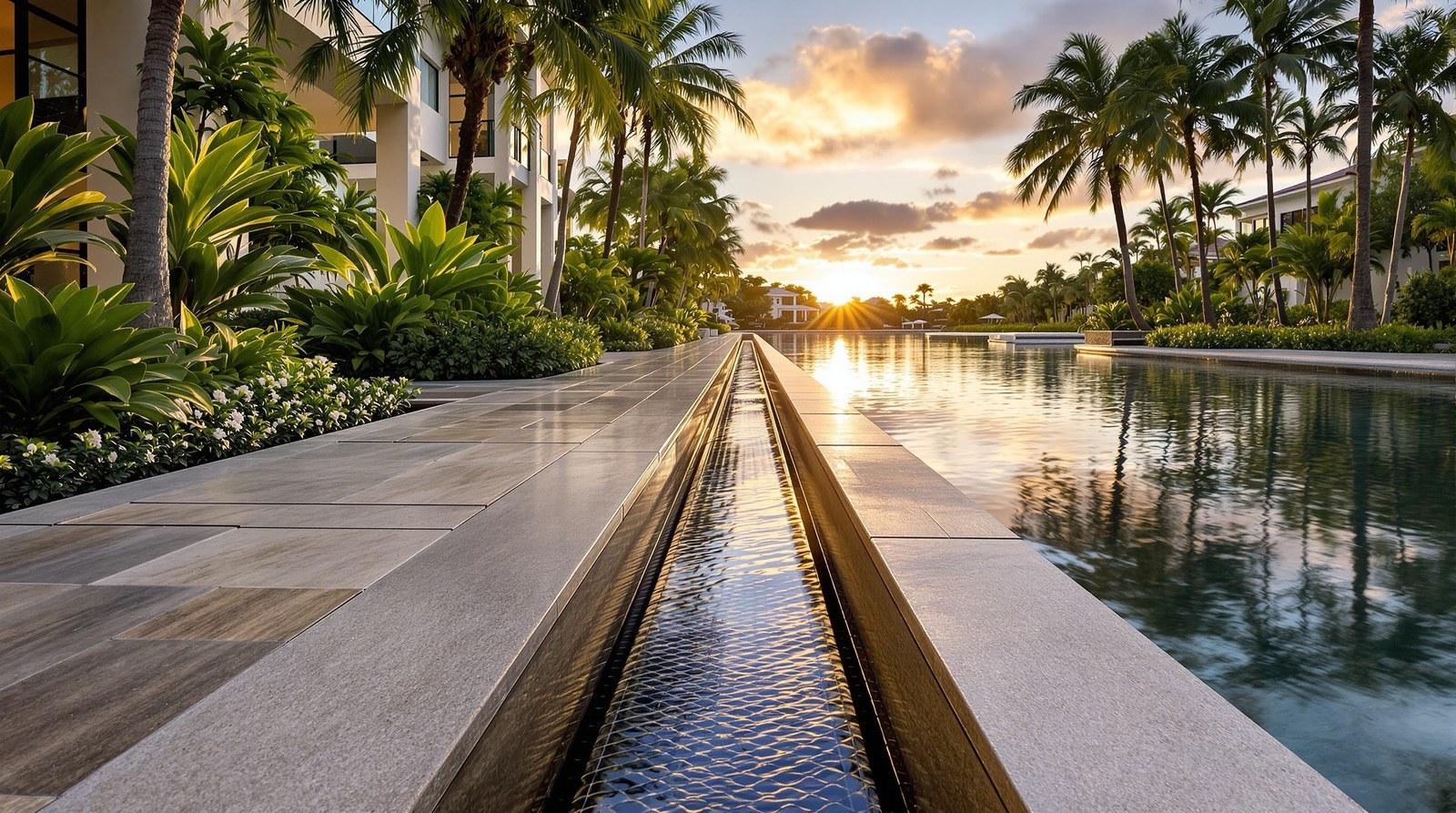
Luxury waterfront homes in South Florida often have beautiful outdoor spaces — pool terraces, large driveways, covered patios, docks, outdoor kitchens, garden walls, and carefully designed landscapes. But those same improvements can change how rainwater moves across the property.
Storm runoff is not just a nuisance. If water repeatedly collects in the wrong place, it can damage landscaping, undermine hardscape, stress seawalls, contribute to erosion, and reduce the usability of outdoor living areas.
Start With the Water Path
The first step is understanding where water starts, where it travels, and where it collects. On luxury waterfront properties, runoff may come from rooflines and downspouts, driveways and motor courts, pool decks and patios, terraces and balconies, side yards and landscape beds, neighboring grade changes, and dock approaches and waterfront hardscape.
Once water reaches the ground, it may move toward the home, garage, seawall, canal, or low lawn areas. A good plan maps those pathways before recommending a solution.
Grading Improvements
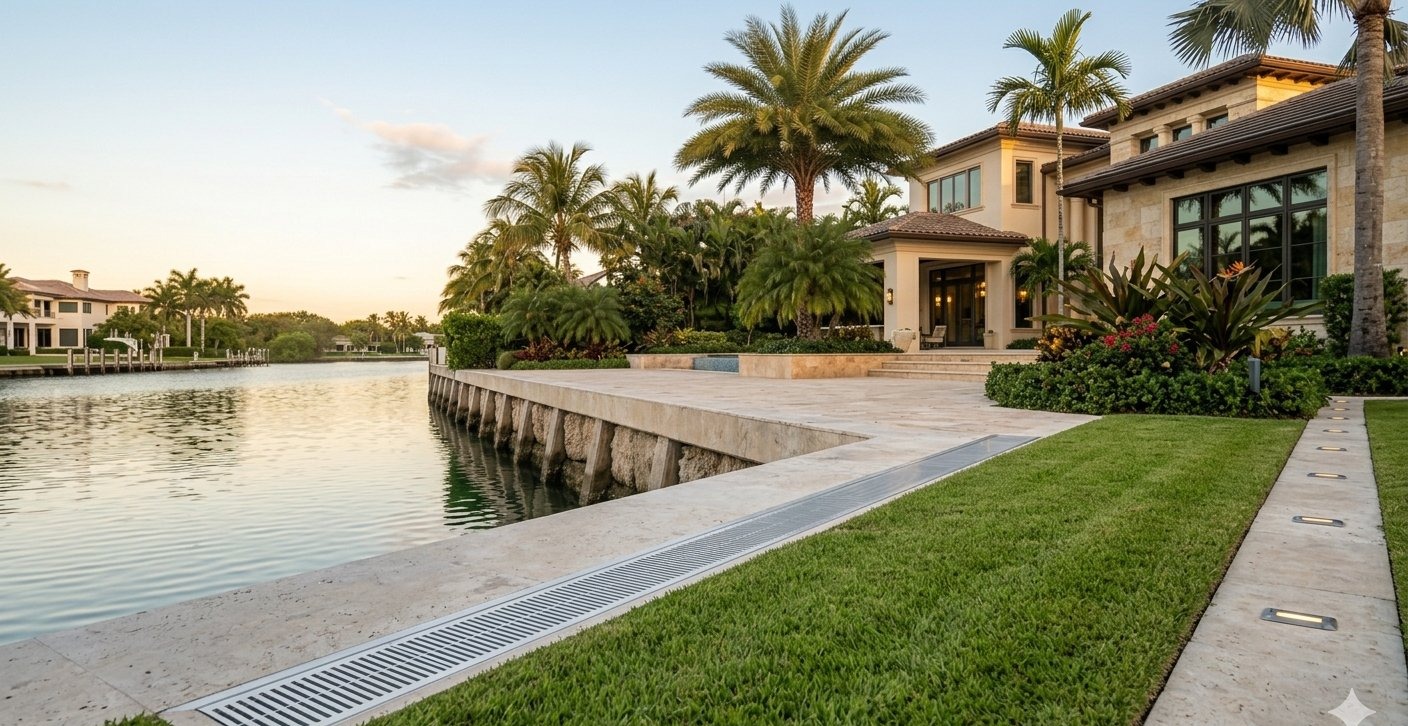
Grading is the foundation of storm-runoff control. If surfaces slope toward the home or toward sensitive shoreline areas, drainage systems have to work harder. A grading review may identify low areas that trap water, hardscape that slopes toward the home, lawn areas directing water to the seawall, pool decks that do not drain efficiently, and transitions where water jumps from one surface to another. Small grading adjustments can sometimes make a major difference, especially when paired with drains, swales, or permeable surfaces.
Drainage System Review
Existing drainage systems are often added in phases over many years. A property may have old drains, disconnected lines, clogged catch basins, undersized pipes, or outfalls affected by tide. A drainage review should look at catch basin placement, pipe condition and capacity, downspout connections, outfall performance, backflow risk, tide influence, and maintenance access. The goal is to make the system work as a coordinated whole — not simply to add more drains.
Permeable Surfaces and Low-Impact Design
South Miami encourages low-impact development techniques such as rain barrels and permeable pavers to help manage stormwater onsite rather than sending more runoff into overwhelmed drainage systems. For luxury properties, low-impact design can be integrated in a refined way. Permeable pavers, gravel bands, planted infiltration zones, rain gardens, and amended soils can help reduce runoff while preserving the property's aesthetic. These solutions are especially useful around driveways, guest parking, garden paths, pool overflow areas, and landscape transitions.
Riparian Buffers and Planted Runoff Zones
If runoff moves toward a canal, bay, lake, or seawall, a planted buffer may help filter and slow water before it reaches the shoreline. A riparian buffer can reduce direct runoff into the waterway, slow erosion near the shoreline, filter sediment and pollutants, improve the transition from lawn to water, and add privacy and natural character. The buffer should be designed intentionally — it must fit the property's view corridors, maintenance expectations, access needs, and shoreline conditions.
Seawall Drainage Planning
Poor drainage behind a seawall can increase pressure and contribute to seepage, soil loss, and structural stress. For that reason, seawall protection and storm-runoff management should be reviewed together. If water collects behind the wall after storms, or if soil is washing out near drains or joints, the drainage system may need attention before a cosmetic repair is considered.
"The best time to solve runoff problems is before a major renovation. A drainage review early in the design process can prevent expensive corrections later."
Plan Before Renovating
If you are planning a pool renovation, dock upgrade, patio expansion, driveway update, landscape redesign, or home addition, drainage should be reviewed before construction begins. New hardscape can change runoff. A drainage review helps identify risks early so improvements can be integrated before the project is built.
South Miami Waterfront Protection helps homeowners evaluate runoff, drainage, grading, seawall interaction, and shoreline protection as one system across South Miami, Pinecrest, Cutler Bay, and all of South Florida. Also explore storm-runoff management and riparian buffer installation.