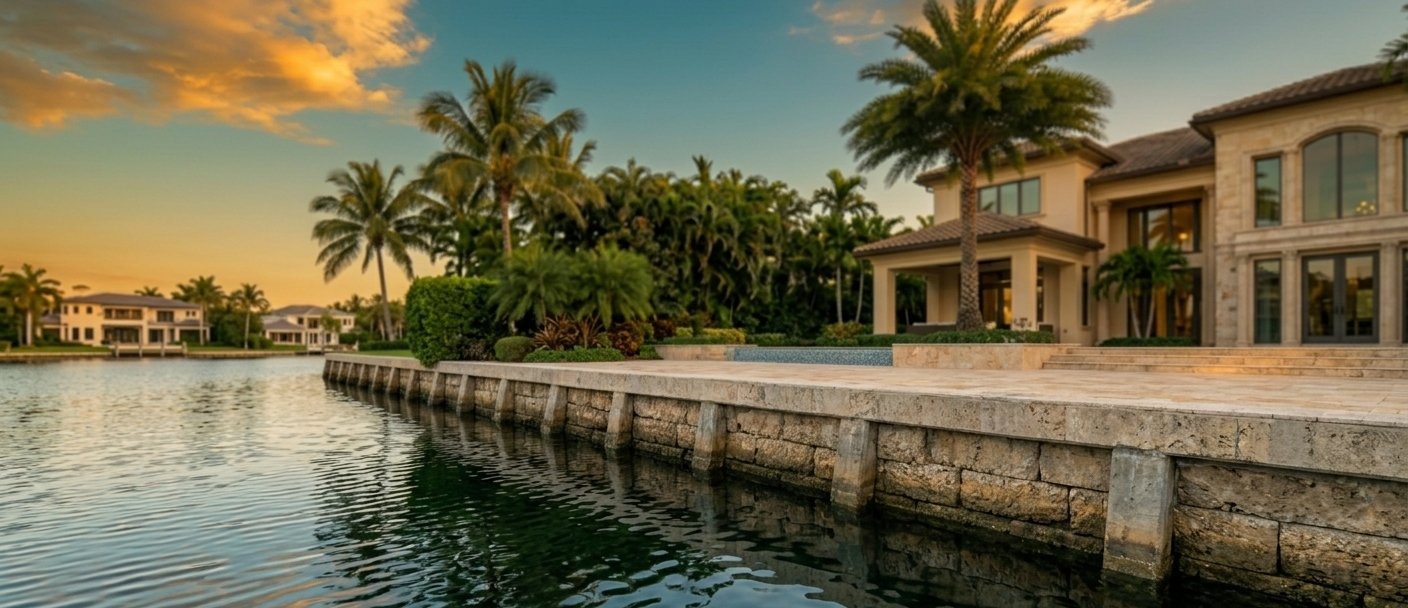
South Miami canal-front estate — seawall and shoreline protection
Local Protection for South Miami Properties
South Miami properties can face a mix of drainage and flood-related concerns, especially where older grading, mature landscaping, hardscape additions, and neighborhood stormwater patterns affect how water moves across the site.
Our work focuses on the areas that matter most to property owners:
- Seawall condition and shoreline stability
- Storm-runoff movement across lawns, driveways, patios, and pool decks
- Drainage issues near low areas or waterfront edges
- Erosion behind seawalls or along planted shoreline areas
- Riparian buffer and living shoreline opportunities
- Pre-renovation review before outdoor improvements
- Waterfront property assessment before purchase, listing, or repair
"Between king tides, heavy rain, and aging seawalls — South Miami waterfront properties need a proactive protection plan, not a reactive repair bill."
Seawall and Shoreline Assessments
A seawall should be reviewed as part of a larger waterfront system. Cracks, rust stains, leaning sections, soil settlement, water seepage, and soft areas near the wall can all point to stress behind the structure.
During a South Miami waterfront assessment, we review visible conditions and help owners identify the most practical next steps. That may include monitoring, repair planning, drainage review, shoreline stabilization, or preparation for a larger restoration project.
Drainage and Storm-Runoff Planning
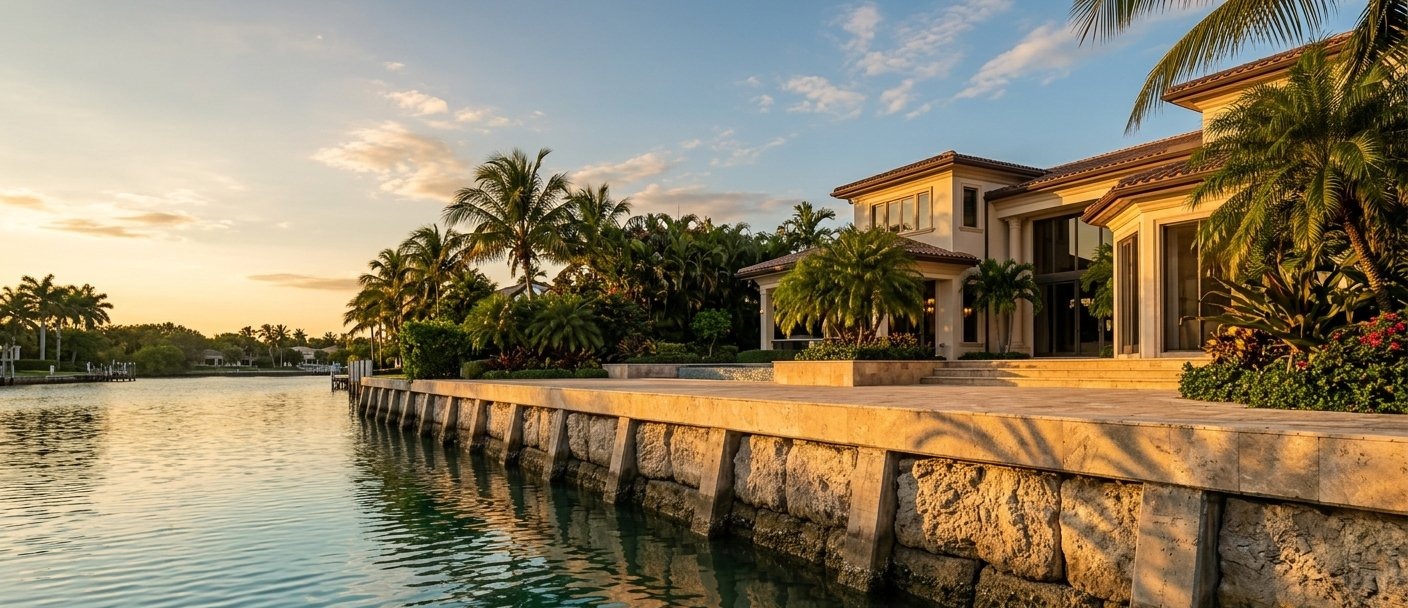
Many South Miami properties experience water movement issues after heavy rain. A driveway, side yard, pool deck, patio, or landscape area may hold water because of grading, compacted soil, undersized drains, clogged outlets, or water moving from one part of the property to another.
Storm-runoff management helps protect the home, the landscape, and the shoreline. It is especially important before a major renovation, because new hardscape can change runoff patterns and create problems that were not visible before construction.
The City of South Miami provides flood safety resources and lists Planning and Zoning as a contact for review of flood and drainage issues. Miami-Dade County requires a Class I Permit before work in, on, over, or upon tidal waters or coastal wetlands.
Riparian Buffers and Estate Shoreline Design
For properties with a suitable waterfront edge, a riparian buffer can improve the transition between land and water. Native or salt-tolerant planting, erosion control, and runoff filtration can help soften the shoreline while supporting a more resilient waterfront.
The goal is not simply to add landscaping. The goal is to create a functional shoreline edge that looks intentional, performs well, and fits the character of a premium South Miami property.
Permitting and Project Planning
Waterfront work in Miami-Dade can involve local, county, state, or federal review depending on the property and scope. Before starting a seawall, drainage, mangrove, shoreline, or coastal-adjacent project, owners should understand what approvals may be required.
South Miami Waterfront Protection helps organize the early planning conversation so owners can move forward with better information and fewer surprises. Related services: seawall protection, storm-runoff management, waterfront property assessments.