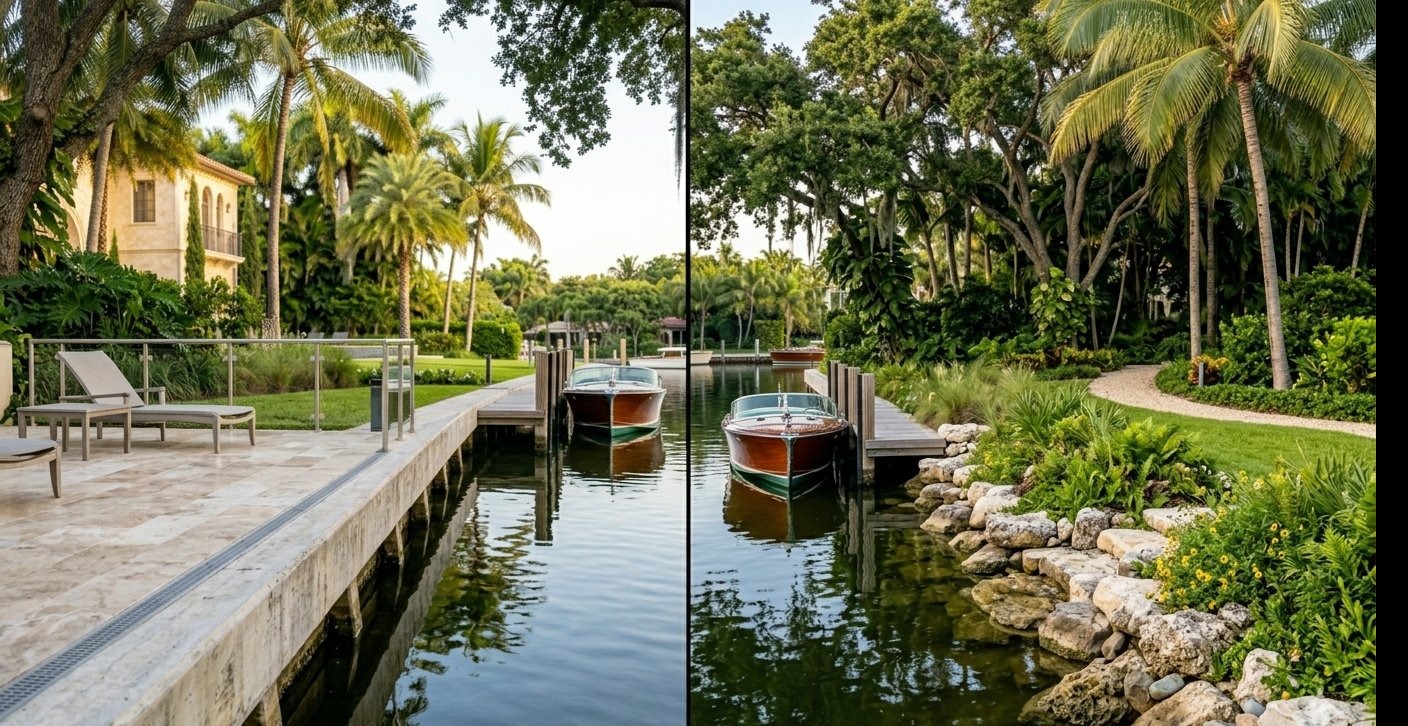
South Florida waterfront properties need shoreline protection, but the right solution is not always the same for every property. Some homes need the structural defense of a seawall. Others may benefit from a living shoreline, riparian buffer, or hybrid approach that combines hardened protection with native planting and runoff management.
For homeowners in South Miami, Coral Gables, Coconut Grove, Cutler Bay, Pinecrest, and nearby coastal neighborhoods, the question is not simply "seawall or plants?" The better question is: what does this property need to manage erosion, water movement, aesthetics, access, and long-term resilience?
What a Seawall Does Well
A seawall is a hardened shoreline structure designed to hold soil in place and provide a defined edge between land and water. On many canal-front and bay-adjacent properties, a seawall can be essential because the property has limited space, existing structures close to the water, dock access, or high exposure to wave and tidal forces.
Seawalls are often appropriate when:
- The property needs a vertical structural edge
- Homes, patios, pools, or docks are close to the shoreline
- The existing waterfront is already hardened
- The shoreline is exposed to significant wave or wake energy
- Erosion risk threatens usable land or improvements
- Dock access and boat use require a stable edge
The main advantage is structure. The main limitation is that a seawall does not automatically solve drainage or runoff issues behind the wall. If water pressure builds behind it, the wall can still experience stress, seepage, soil loss, and deterioration.
- Canal-front and bayfront properties
- Structures close to shoreline
- High wave or wake energy exposure
- Dock access and boating
- Properties with existing hardened shorelines
- Properties with erosion but stable structure
- Runoff filtration and habitat improvement
- Softer waterfront aesthetic
- Low-to-moderate wave exposure
- Hybrid paired with existing seawall
What a Living Shoreline Does Well
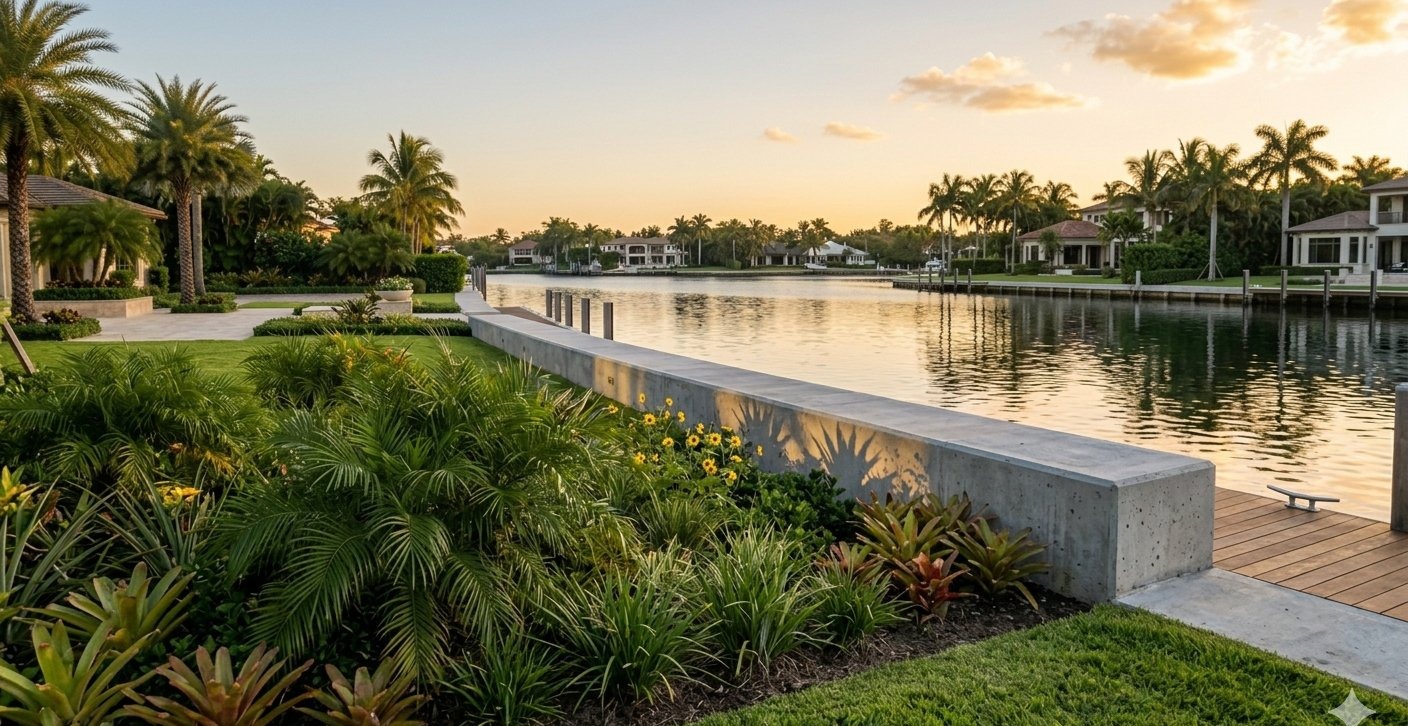
A living shoreline uses natural materials, native vegetation, and sometimes structural elements such as rock sills, oyster reefs, or other stabilization features to reduce erosion and connect land and water in a more natural way.
NOAA describes living shorelines as stabilization approaches that incorporate natural vegetation or other living and natural elements to stabilize the shoreline, reduce erosion, and provide ecosystem services such as habitat and improved water quality.
Florida DEP also describes living shorelines as green-gray coastal-resilience solutions that can reduce wave damage, absorb wave energy, reduce erosion, and add aesthetic value and privacy to South Florida waterfront properties.
Where Living Shorelines May Not Be Enough
Living shorelines are not right for every site. A property with a narrow lot, deep water at the edge, heavy boat wake, a failing vertical seawall, or major structures close to the shoreline may still require hardened protection. Living shoreline features also require thoughtful design and maintenance — the plantings, slope, soil, water exposure, and maintenance plan all matter.
The Hybrid Approach — Best of Both
Many luxury South Florida properties benefit from a hybrid approach. That may mean an existing or improved seawall provides structural protection while a planted buffer, riparian edge, or runoff-management zone improves water quality, softens the edge, and reduces erosion pressure.
A hybrid plan may include:
- Seawall repair or reinforcement
- Drainage improvements behind the wall
- Native or salt-tolerant planting near the waterfront
- Riparian buffer installation
- Runoff filtering before water reaches the canal or bay
- Maintenance planning for long-term shoreline performance
"Seawalls and living shorelines are not competitors. They are tools. The best solution is the one that fits the property."
Permitting Considerations
Waterfront work in Miami-Dade may require permits and approvals depending on where the work occurs and what is being changed. Miami-Dade County states that a Class I Permit is required before work in, on, over, or upon tidal waters or coastal wetlands in Miami-Dade County or its municipalities. That is why planning should begin early — the permitting path can influence design, timeline, scope, and construction sequencing.
South Miami Waterfront Protection can help evaluate whether your property needs seawall protection, riparian buffer installation, storm-runoff management, or a hybrid shoreline strategy across Coral Gables, Coconut Grove, and all of South Florida.